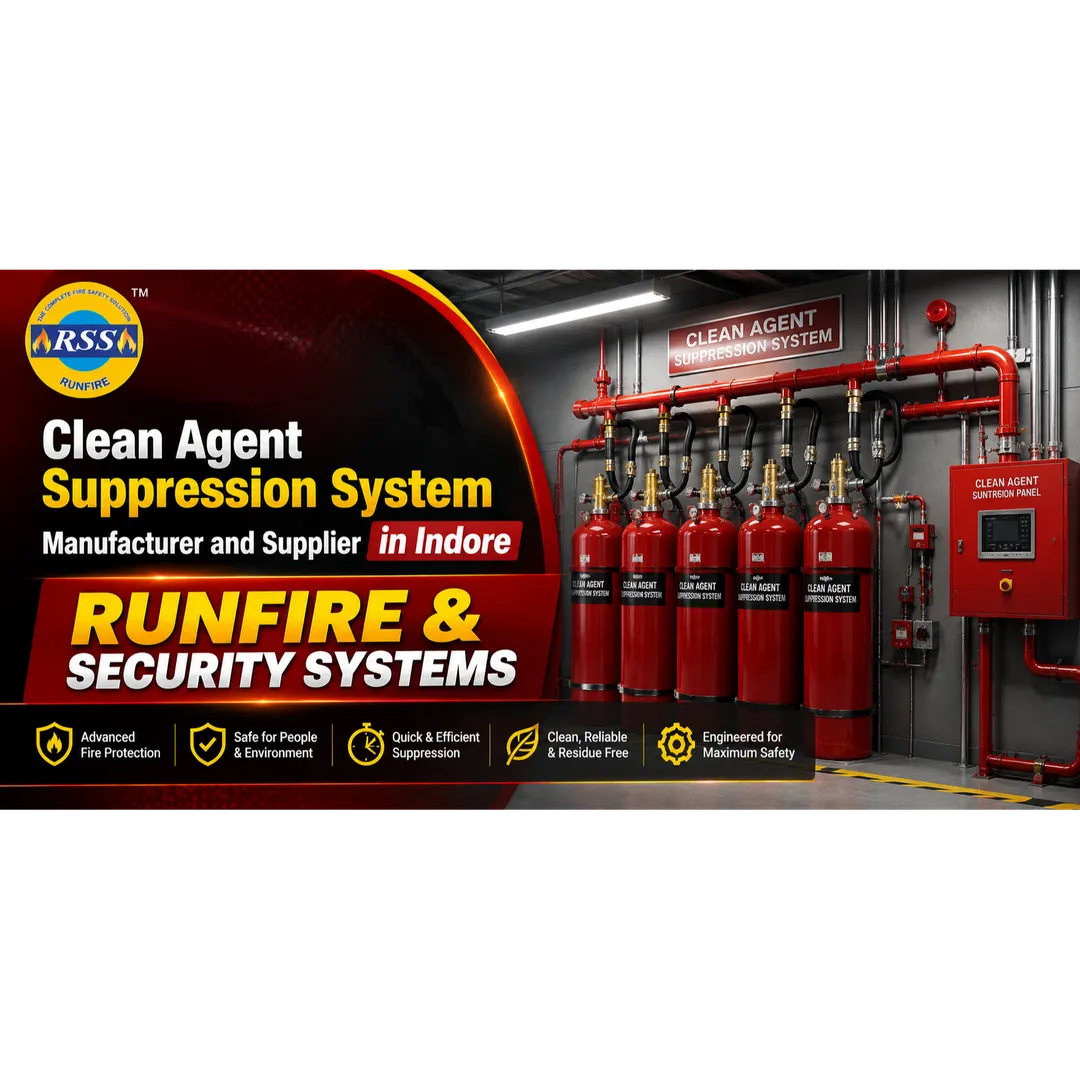
Fire Suppression System in Indore – Reliable Fire Protection Solutions by Runfire & Security Systems
Fire can spread within seconds, especially in industrial plants, server rooms, electrical areas, commercial kitchens, warehouses, and other high-risk environments. Traditional fire extinguishers are useful for initial fire response, but certain locations require a more advanced solution that can detect and suppress fire quickly.
Runfire & Security Systems, Indore provides fire suppression system solutions designed for different commercial, industrial, electrical, and specialized fire-risk environments. The right suppression system can provide an additional layer of protection for critical assets, equipment, infrastructure, and people.
What Is a Fire Suppression System?
A fire suppression system is an engineered fire-protection arrangement designed to detect and control or suppress a fire using an appropriate extinguishing agent.
Depending on the application, a suppression system may use agents such as water, foam, clean agents, inert gases, dry chemicals, or other specialized extinguishing media.
A typical automatic system can include:
- Fire detection devices
- Control panels
- Detection tubing or sensors
- Suppression cylinders or tanks
- Releasing mechanisms
- Nozzles and piping
- Alarm and notification components
- Manual release or emergency controls
The system is selected and designed according to the specific hazards and requirements of the protected area.
Fire Suppression System Supplier in Indore
Businesses searching for a fire suppression system supplier in Indore need a solution that matches their actual fire risks rather than a generic product.
Runfire & Security Systems works with customers to identify suitable fire suppression solutions for applications such as:
- Server rooms
- Data centers
- Electrical rooms
- Control rooms
- Industrial machinery
- CNC and manufacturing equipment
- Commercial kitchens
- Warehouses
- Manufacturing plants
- Electrical panels
- Generator rooms
- Battery and equipment areas
- Commercial establishments
- Specialized industrial environments
The appropriate system depends on the equipment, room characteristics, fire load, occupancy, environmental conditions, and applicable fire-safety requirements.
Types of Fire Suppression Systems
Different environments require different suppression technologies. Some commonly used systems include:
1. Clean Agent Fire Suppression System
Clean-agent systems are designed for spaces containing sensitive electrical and electronic equipment. The extinguishing agent is intended to suppress fire without leaving the type of solid residue associated with conventional dry chemical powder.
Potential applications include:
- Server rooms
- Data centers
- Telecom rooms
- Control rooms
- Electrical rooms
- Equipment rooms
These systems should be designed according to the protected enclosure, agent requirements, safety considerations, and applicable standards.
2. CO₂ Fire Suppression System
Carbon dioxide suppression systems can be used for certain industrial and electrical applications where CO₂ is an appropriate extinguishing medium.
They may be considered for:
- Electrical equipment
- Industrial machinery
- Generator areas
- Control equipment
- Specialized industrial spaces
Because CO₂ can create an oxygen-deficient atmosphere, total-flooding systems require appropriate engineering, safety controls, warning systems, and evacuation provisions.
3. FM-200 / HFC-Based Suppression Systems
Certain gaseous suppression systems use clean extinguishing agents designed for protecting sensitive equipment and enclosed areas.
They may be used in suitable:
- Data centers
- Server rooms
- Electrical rooms
- Control rooms
- Telecom facilities
- Industrial equipment rooms
The specific agent and system configuration should be selected based on the application's technical and regulatory requirements.
4. Dry Chemical Fire Suppression System
Dry chemical suppression systems can be suitable for selected industrial hazards where rapid suppression using dry chemical agents is appropriate.
Applications may include:
- Industrial machinery
- Manufacturing equipment
- Flammable-liquid hazards
- Specialized process areas
- Certain kitchen applications
System selection should be based on the exact hazard and manufacturer's design requirements.
5. Wet Chemical Fire Suppression System
Commercial kitchens can present a significant fire risk because of cooking oils, fats, grease, and high-temperature cooking equipment.
Wet chemical suppression systems are designed for suitable kitchen fire hazards and may protect equipment such as:
- Cooking ranges
- Fryers
- Grills
- Exhaust hoods
- Commercial cooking lines
Automatic detection and agent discharge can help control a fire rapidly when the system is correctly designed and maintained.
6. Water-Based Fire Suppression Systems
Water-based systems are widely used in many building and industrial applications where water is an appropriate extinguishing medium.
Depending on the project, solutions may include:
- Sprinkler systems
- Deluge systems
- Water spray systems
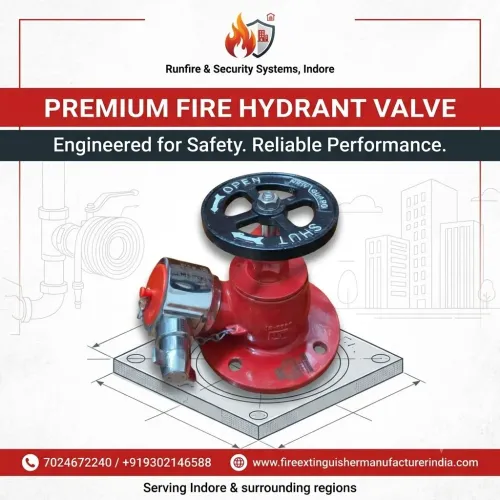
- Hydrant-related fire protection infrastructure
The choice depends on the building design, hazard classification, occupancy, fire load, and applicable standards.
Why Install a Fire Suppression System?
A properly engineered fire suppression system can provide several important benefits:
Rapid fire response: Automatic detection and suppression can reduce response time during the early stages of a fire.
Protection of critical equipment: Specialized systems can protect valuable electrical, electronic, and industrial assets.
Reduced potential downtime: Suppressing a fire quickly may help limit damage to critical operations and equipment.
Additional fire-safety protection: Suppression systems complement other fire-protection measures such as extinguishers, alarms, hydrants, and emergency procedures.
24/7 readiness: Automatic systems can remain ready to respond even when personnel are not immediately present.
Fire Suppression System for Industrial Applications in Indore
Indore and the surrounding industrial belt have manufacturing units, warehouses, processing facilities, commercial buildings, and technology-driven businesses with diverse fire risks.
Industrial environments may contain electrical equipment, machinery, fuels, lubricants, combustible materials, packaging, chemicals, or other hazards.
A fire suppression solution should therefore be based on a site-specific fire-risk assessment.
Runfire & Security Systems can assist businesses in identifying suitable suppression approaches based on their application and protection requirements.
Fire Suppression System for Server & Data Rooms
Modern businesses depend heavily on servers, networking equipment, storage systems, and electronic infrastructure.
A conventional water discharge may be unsuitable for certain sensitive equipment environments. For appropriate applications, clean-agent or gaseous suppression technologies can provide an alternative approach to protecting enclosed electronic spaces.
A properly designed system can integrate:
- Automatic fire detection
- Alarm notification
- Control and releasing panel
- Suppression cylinders
- Discharge nozzles
- Manual release facilities
- Abort controls where applicable
- Warning indicators
- Pressure monitoring
The final configuration should always be engineered for the specific protected room.
Fire Suppression System for Commercial Kitchens
Restaurants, hotels, cafeterias, food-processing units, and commercial kitchens can have elevated fire risks due to cooking oils, grease, heat, and open flames.
A suitable kitchen suppression system can be integrated with the cooking equipment and exhaust hood to provide automatic fire protection.
Regular inspection and maintenance are essential to ensure that detection, agent storage, discharge mechanisms, and connected safety controls remain operational.
How Does an Automatic Fire Suppression System Work?
A typical automatic suppression sequence can involve:
Step 1 – Fire Detection
A detector or detection mechanism identifies abnormal heat, flame, smoke, or another defined fire condition.
Step 2 – Alarm Activation
The system activates an alarm or warning signal to alert occupants.
Step 3 – System Release
After the configured release conditions are satisfied, the suppression system activates.
Step 4 – Agent Discharge
The selected extinguishing agent is discharged through appropriately positioned nozzles or outlets.
Step 5 – Fire Suppression
The agent acts on the fire according to its suppression mechanism and the protected hazard.
Step 6 – Emergency Response
Personnel follow the site's emergency procedures and contact the appropriate emergency services when required.
Automatic suppression is not a substitute for evacuation procedures and broader fire-safety planning.
Fire Suppression System Installation in Indore
Professional design and installation are important because suppression performance depends on factors such as:
- Protected area dimensions
- Ceiling height
- Fire hazard classification
- Equipment arrangement
- Agent selection
- Cylinder capacity
- Nozzle positioning
- Detection configuration
- Pressure and piping requirements
- Ventilation
- Room integrity
- Applicable standards
Runfire & Security Systems can provide fire-suppression solutions for businesses looking for fire suppression system installation in Indore and nearby industrial and commercial areas.
Fire Suppression System Maintenance
Installing a suppression system is only the beginning of fire protection. Regular inspection and maintenance help ensure that the system remains ready for an emergency.
Maintenance may include checking:
- Detection devices
- Control panels
- Cylinders and pressure
- Valves
- Nozzles
- Piping
- Electrical connections
- Alarm functions
- Manual release mechanisms
- System integrity
- Agent quantity
Maintenance schedules should follow the manufacturer's instructions and applicable fire-safety requirements.
Why Choose Runfire & Security Systems in Indore?
When selecting a fire protection company, businesses should look for a provider capable of understanding their specific fire hazards and recommending an appropriate solution.
Runfire & Security Systems, Indore focuses on fire protection solutions for commercial, industrial, electrical, institutional, and specialized applications.
Key considerations include:
- Application-focused fire protection
- Multiple suppression technologies
- Solutions for industrial environments
- Protection for electrical and electronic equipment
- Commercial kitchen fire protection
- Professional installation requirements
- Maintenance and service support
Frequently Asked Questions About Fire Suppression Systems
What is a fire suppression system?
A fire suppression system is an engineered fire-protection system designed to detect and suppress or control a fire using a suitable extinguishing agent.
What is the difference between a fire extinguisher and a fire suppression system?
A fire extinguisher is generally a portable or manually operated first-response device. A fire suppression system is a larger engineered solution that can incorporate automatic detection, control equipment, piping, nozzles, cylinders, and automatic agent discharge.
Which fire suppression system is best for a server room?
There is no universal answer. For suitable server-room applications, clean-agent or gaseous suppression systems are commonly considered because they can protect sensitive equipment without the residue associated with some conventional extinguishing agents. The system should be professionally engineered for the room and equipment.
Which fire suppression system is suitable for a commercial kitchen?
Wet chemical suppression systems are commonly designed for suitable commercial cooking hazards involving oils and fats. The system should be selected and installed according to the cooking equipment and applicable requirements.
Is a fire suppression system necessary for an industrial unit?
The need depends on the building, occupancy, processes, fire hazards, risk assessment, and applicable regulations. High-risk industrial areas may require engineered suppression systems as part of their overall fire-protection strategy.
Where can I get a fire suppression system in Indore?
Businesses looking for fire suppression systems in Indore can contact Runfire & Security Systems to discuss their application, protected area, fire hazards, and required fire-protection solution.
Protect Your Business with the Right Fire Suppression Solution
Fire protection should be planned before an emergency occurs. From industrial machinery and electrical rooms to commercial kitchens, server rooms, warehouses, and other high-risk environments, the right suppression technology can provide an important additional layer of protection.
Runfire & Security Systems, Indore offers fire suppression system solutions for businesses and organizations looking to strengthen their fire-safety infrastructure.
If you are searching for a fire suppression system manufacturer, supplier, installer, or fire protection company in Indore, discuss your specific application with Runfire & Security Systems and select a solution based on your actual fire risk.
Runfire & Security Systems – Fire Suppression System Solutions in Indore, Madhya Pradesh
Fire suppression systems should be designed, installed, tested, inspected, and maintained by qualified professionals in accordance with the applicable standards, manufacturer's requirements, site conditions, and local regulations.
Keywords